Circle’s stablecoin USDC processed $36 trillion in transactions during the first half of 2026, capturing a reported 77% share of global stablecoin transaction volume by June. Despite this dominance, the issuer retained just seven cents in net profit per revenue dollar, according to figures released by Kash Razzaghi, Circle’s Chief Commercial Officer, on October 16.
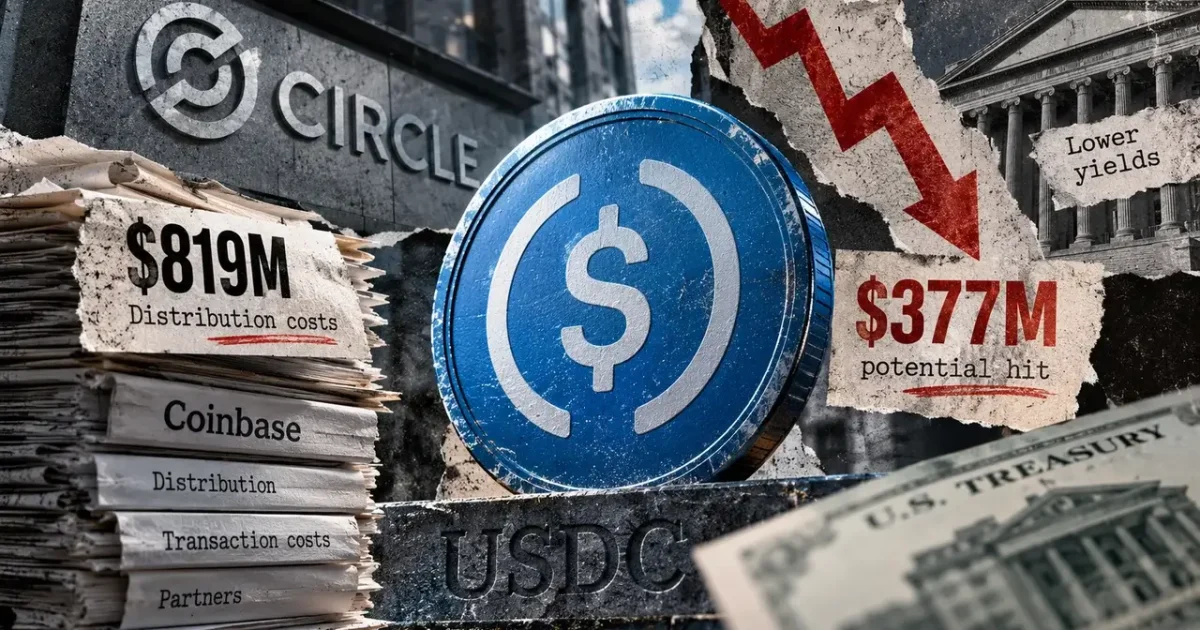
Circle generated $1.4 billion in H1 2026 revenue, primarily from assets backing USDC, which include cash and US government securities. The company spent 93% of that revenue on distribution, operations, and network investment. Distribution and transaction costs alone consumed 59 cents per revenue dollar, totaling $819 million in H1. Operating expenses and network investment added another $473 million, leaving Circle with $103 million in net profit for the period.
The margin compression reflects intensifying competition from rival stablecoin issuers offering distribution partners more favorable revenue-sharing terms. Circle’s largest distribution partner, Coinbase, held an average $20 billion in USDC during Q2, representing a 44% year-over-year increase in holdings. Binance, which signed a five-year commercial agreement with Circle in September, invested $100 million in the issuer as part of the arrangement.
Circle earns most of its revenue through income generated by USDC balances maintained by distribution partners, creating financial incentives for exchanges, wallets, and payment companies to promote the stablecoin. More than 150 other partners beyond Coinbase and Binance have economic interest in USDC’s growth. Circle shares a portion of reserve earnings with these distribution partners, a practice now facing pressure as newer stablecoin providers increase the share offered to their distribution networks.
USDC issuance and redemptions totaled $315 billion in H1 2026, averaging $1.7 billion per day. Q2 alone saw $170 billion in minting and redemptions, a 105% year-over-year increase. Circle maintains reserves to enable free near-real-time redemptions through its Circle Payments Network, holding cash at banking partners including BNY Mellon, which serves as custodian. BlackRock manages a government money market fund holding Circle’s reserves.
Circle argues that retained revenue must fund banking access, liquidity infrastructure, and compliance systems enabling USDC to operate across international markets. The issuer maintains 55 licenses and regulatory registrations, 25 banking partnerships, and native USDC deployment across 35 blockchains, with compliance operations covering 185 countries.
The tension between maintaining profitability and offering competitive distribution terms comes as Circle prepares to report Q3 2026 financial results on November 4.