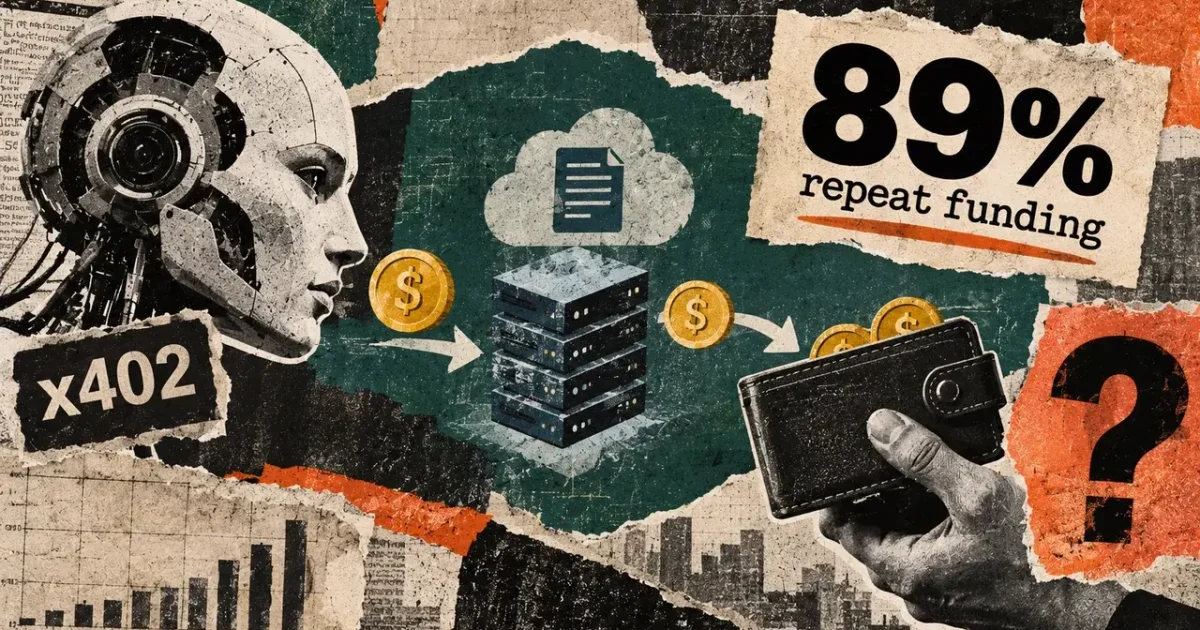
Chainalysis reported that nearly nine in 10 x402 wallets funded in the second quarter of 2026 received fresh deposits within 30 days, signaling accelerating adoption of cryptocurrency micropayments by AI agents on the Base blockchain.
The median time between wallet funding and first payment collapsed to 18 minutes, down from 73 days in late 2025. The 89.3% refill rate marks a sharp climb from 70.6% in the third quarter of 2025, when only 4% of newly funded wallets made payments within an hour.
x402 is a Coinbase standard enabling software applications to pay for online resources directly through web requests without manual user authorization. The technology allows AI agents to request information or computing services, receive payment instructions, and settle transactions in cryptocurrency before accessing resources.
By July 2026, x402 transactions had surpassed 138 million. An academic study examining 136.7 million x402 settlements in July found that 87% of payments ranged between $0.0001 and $0.10, underscoring the micropayment focus. The study valued those settlements at $44.1 million.
Geographic Concentration and AI Model Demand
US-attributed wallets dominated AI infrastructure spending. US-linked wallets accounted for 88.1% of AI model inference payments, the largest transaction category. US wallets represented 41.8% of agent frameworks and development tools payments, while Chinese-linked wallets captured 90% of security and code-analysis service payments. Chinese wallets represented only 0.1% of AI model inference transactions.
Will Su, head of digital assets research at BlackRock, characterized the shift as driven by “autonomous agents potentially generating continuous demand for small payments throughout the day.”
US developers dominate the emerging AI payment economy due to concentration of AI developers, stablecoin issuers, and cryptocurrency infrastructure providers. Chinese developers show greater reliance on open-weight AI models like DeepSeek and Qwen that run without paying external providers.
Merchant Viability and Transaction Authenticity
An academic study found that 811 distinct payment recipients received x402 settlements during its observation period. Only 249 of those recipients earned at least $10, raising questions about merchant sustainability. The study estimated $20.26 million in potentially genuine economic activity and identified $187,861 in payments reaching recognizable services without detected connections.
The academic research also identified significant fictitious activity. The study found that 21.2% of x402 transactions were fictitious (self-payments and closed loops), and 63.78% occurred within wallet clusters potentially including related operators. This suggests much recorded activity may not represent independent business spending.
Payment providers face a commercial test of whether recurring wallet activity can sustain profitable businesses. Micropayments via x402 appeal partly because conventional banking and card-processing charges can exceed the value of small purchases.
Early x402 activity was heavily influenced by speculative token launches and short-lived applications. Subsequent x402 payments increasingly flow toward information services and AI infrastructure.