GD Culture Group, a Nasdaq-listed digital media and technology company, reported a $211.8 million unrealized loss on its Bitcoin holdings in the first half of 2026, even as the company’s split-adjusted share count ballooned to more than 18 times its year-end level.
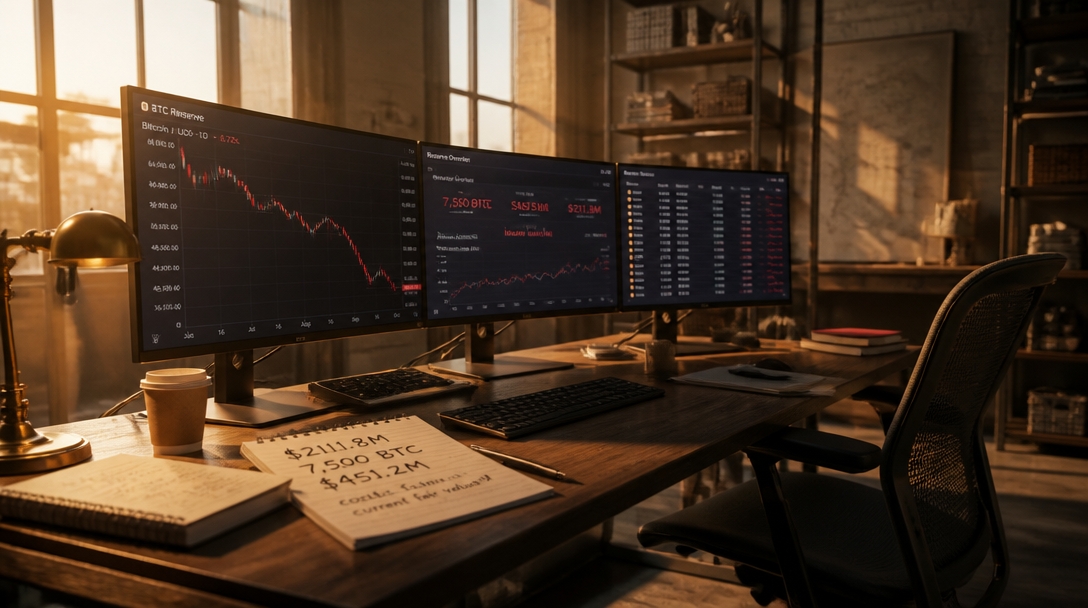
The loss reflects fair-value accounting changes on the company’s 7,500 BTC reserve, which GD Culture acquired through its September 2025 purchase of Pallas Capital Holding. At June 30, 2026, the reserve carried a fair value of $451.2 million against an original cost basis of $842 million. The unrealized loss represented 97.9% of GD Culture’s total net loss of $216.2 million for the six-month period.
The company did not sell its core Bitcoin holdings to cover the loss. Instead, GD Culture raised liquidity through aggressive equity issuances. Between May and June 2026, the company conducted at-the-market share sales that generated $42 million in net proceeds. In June, it completed a separate placement of 1,037,206 split-adjusted shares at $5.25 per share, netting $5.45 million.
These offerings were enabled by a one-for-250 reverse split executed on June 29, 2026. The reverse split adjusted the company’s share count from 229,278 shares at year-end 2025 to 4,162,500 split-adjusted shares outstanding at June 30. The 3.93 million-share increase that followed the split was composed almost entirely of new issuances: 3,919,455 shares, or 99.65% of the increase, came from cash offerings.
GD Culture identified working capital and general corporate purposes as the intended uses for 2026 offering proceeds. The company received $25.1 million in financing cash during the first half. At quarter-end, the company held $21.5 million in an ATM proceeds underwriter account and $7.2 million in its operating bank account, for total working capital of $36.6 million.
The company also liquidated a small portion of short-term trading inventory, selling 1.08 BTC for $71,201 and realizing a $28,799 loss on that transaction.
According to GD Culture’s filing, management concluded it had enough liquidity to meet its obligations for at least 12 months after the interim financial statements were issued. The company consumed $12.3 million in cash during operations in the first half.