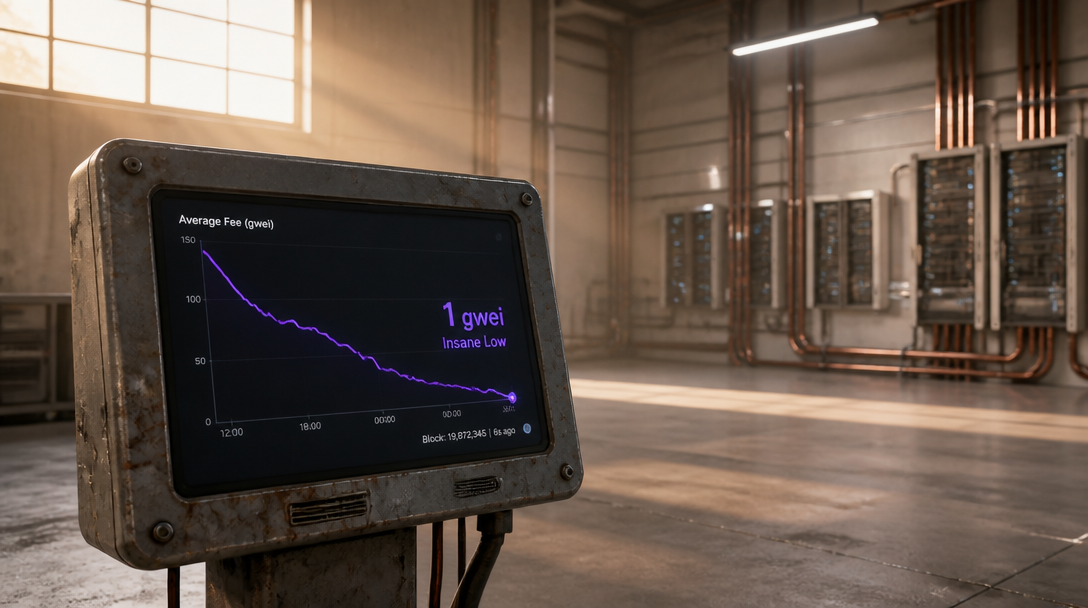
Ethereum base fees have declined to approximately 1 gwei, a level that reduces the amount of ETH burned per transaction while simultaneously improving network accessibility for smaller users and developers.
According to data tracked on Etherscan, the blockchain explorer platform, fees at this level make transactions more affordable for wallet movements, decentralized finance interactions, and application testing. The shift represents a meaningful change in the network’s operational economics.
ETH Burn and Supply Narrative
The decline in base fees directly impacts Ethereum’s burn mechanism, which depends on fee activity to remove ETH from circulation. Lower fees mean fewer tokens are burned per transaction, which weakens the supply-side investment narrative that has anchored bullish cases for ETH since the London upgrade introduced the burn feature in 2021.
This creates a trade-off for the network. Lower fees improve user experience and reduce friction for network participants. But they simultaneously diminish the deflationary pressure that some investors have cited as a driver of long-term ETH value.
User Experience and Network Health
The accessibility gains are material for certain use cases. Lower fees reduce barriers for smaller participants to interact with the network, make testing applications less expensive, and lower the cost of moving funds between addresses and protocols. For users with smaller positions, the difference between 10 gwei and 1 gwei can determine whether a transaction is economically rational.
Etherscan continues to serve as the primary public source for real-time fee data, allowing market participants to monitor base fee levels and transaction costs across the network.
Distinguishing Narrative From Data
Bitcoinist, the publication covering developments in the space, has emphasized the importance of separating confirmed fee levels from speculation about market implications. The current 1 gwei figure is a confirmed data point. The longer-term implications for Ethereum’s investment thesis and network dynamics remain subject to interpretation based on broader market conditions and network demand.