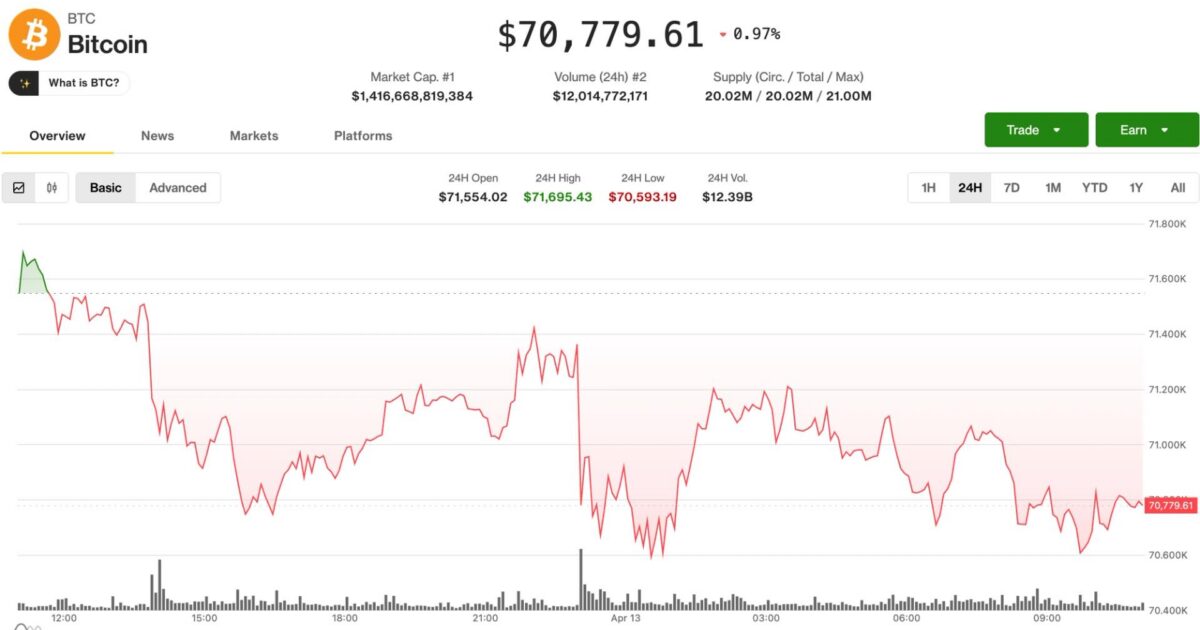
Bitcoin and ether faced notable declines on Monday as increased tensions in the Middle East began to impact financial markets. The rise in crude oil prices, which passed $100 amid a blockade in the Strait of Hormuz, has raised concerns about global economic stability. This situation has prompted traders to adjust their positions, moving toward more defensive derivatives strategies.
Rising oil prices often create ripples throughout various asset classes, including cryptocurrencies. The recent spike has made investors wary, leading to a reluctance to take on riskier assets like Bitcoin and ether. Such shifts in sentiment can derail bullish trends in the crypto market, as traders prioritize stability over potential returns.
Market data reflects this shift. Bitcoin and ether both saw a decrease in price, though specific figures detailing the extent of the retreat remain undisclosed. The overall crypto market trading volume also appears to be affected as investors reassess their strategies in light of the volatile oil market. Analysts anticipate that heightened geopolitical tensions will continue to lead to cautious behavior among crypto investors.
In the coming days, traders will likely keep a close eye on the $100 oil threshold. Any further escalation in the Middle East could exacerbate price movements in both commodities and cryptocurrencies. The situation surrounding the Strait of Hormuz remains fluid, and its implications for oil supply could have significant effects on how Bitcoin and ether perform in the short term.