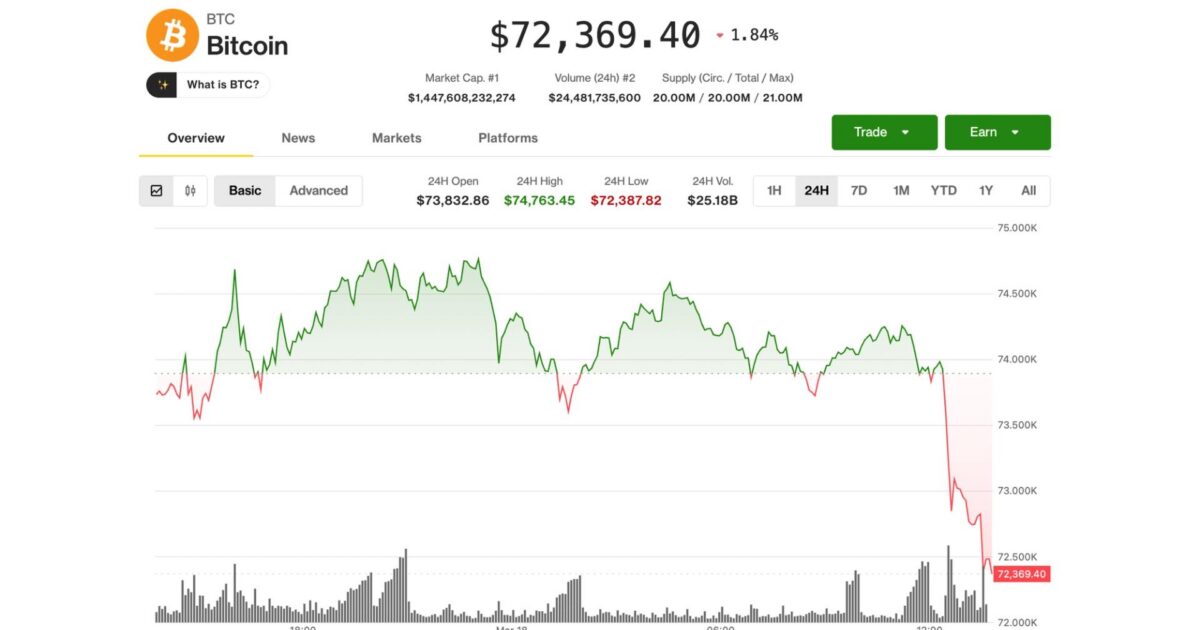
Bitcoin experienced a notable pullback, dropping to $72,300. This decline coincided with escalating geopolitical tensions, particularly related to Iran’s South Pars gas field. Such events often trigger fluctuations in cryptocurrency markets, as investors react to wider economic signals.
Market dynamics shifted sharply after reports surfaced about attacks on the gas field. These developments not only raised concerns over Iran’s stability but also caused oil prices to surge. Cryptocurrencies, including Bitcoin, often respond to these shifts as traders assess risk factors associated with global events.
On the trading front, Bitcoin’s drop comes amidst a backdrop of mixed economic data. Although no specific figures are available regarding U.S. inflation’s direct impact on Bitcoin, general economic indicators have a tendency to influence investor sentiment. Volatility around such data can lead to broad market reactions, affecting trading volumes and price movements.
Looking ahead, traders should monitor the $70,000 mark closely. This threshold may serve as a significant support level in the event of further fluctuations. Additionally, upcoming economic reports could provide further insight into inflation trends, which might further impact Bitcoin’s trajectory in the coming days.