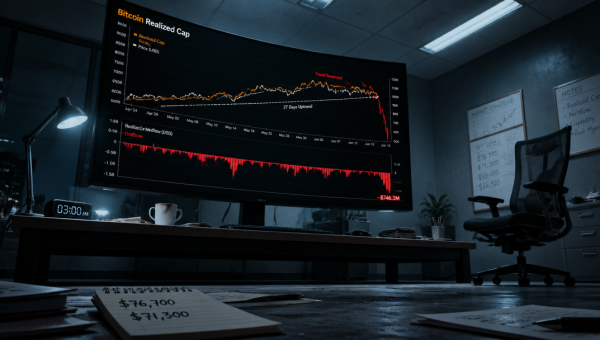
U.S. spot bitcoin ETFs recorded nine consecutive trading days of net outflows totaling $2.8 billion, marking the longest withdrawal streak since the products launched in January 2024.
BlackRock’s iShares Bitcoin Trust (IBIT) experienced its largest single-day outflow since inception earlier in the week, driven largely by a sizeable dark pool transaction. This week alone saw $1.3 billion shed from spot bitcoin ETFs, part of a three-week period of sustained net outflows.
The extended outflow run reflects a broader shift in investor capital allocation. Bitcoin has underperformed AI-related equities, semiconductor, and memory-chip stocks since the start of 2026, as capital has gravitated toward assets tied to growing enthusiasm around AI infrastructure spending.
The current outflow streak follows a pattern established during earlier market corrections. In early February, bitcoin briefly fell toward $60,000 during a correction period. In November, ETF outflows accelerated around bitcoin’s post-all-time-high pullback and local low near $85,000. The recent decline saw bitcoin fall from $80,000 to $73,000.
Historical Precedent for Bottoms
Data from Glassnode suggests that sustained ETF outflows have historically coincided with periods of market stress that later developed into local bottoms. The firm monitors the 14-day moving average of ETF flows as a metric that tends to trough near significant turning points, though such reversals are not guaranteed.
The nine-day outflow streak represents the most sustained withdrawal period since spot bitcoin ETFs began trading in January 2024. Monthly withdrawals have reached $2.3 billion, underscoring the magnitude of institutional redemptions in recent weeks.
Whether the current outflow cycle signals a deeper structural shift in institutional sentiment or a temporary reallocation toward higher-performing asset classes remains an open question. Historical patterns tracked by data providers like SoSoValue and Glassnode suggest that extreme outflow periods sometimes precede local price recovery, but past performance does not guarantee future results.