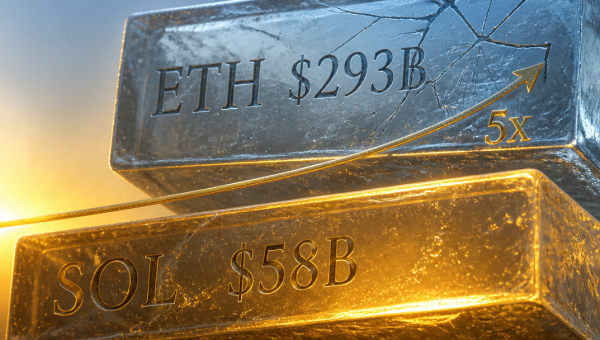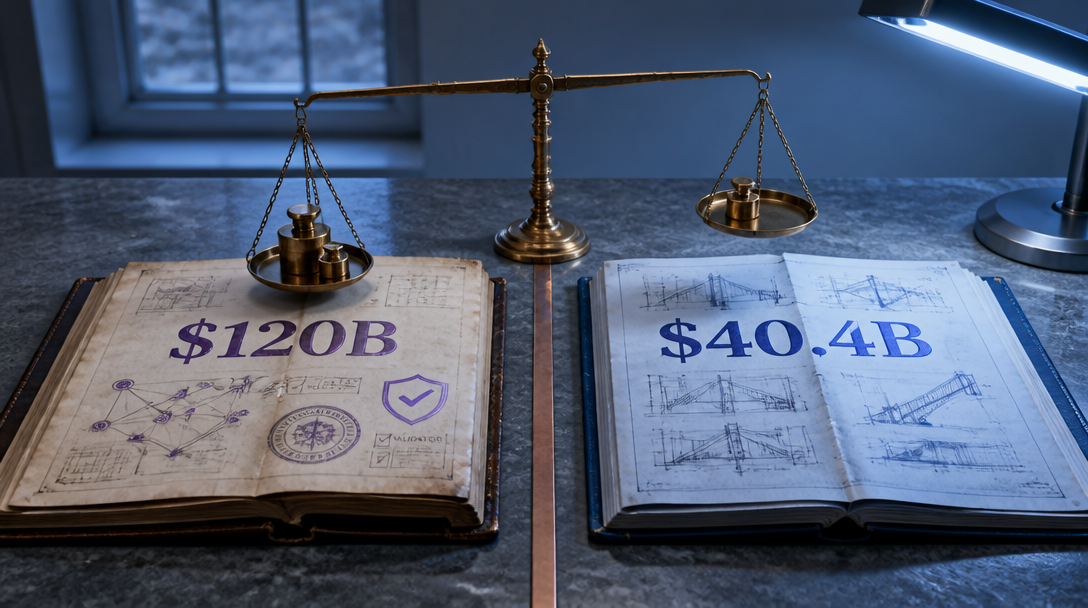
An analysis published by CryptoSlate argues that $120 billion in staked Ethereum and $40.4 billion in layer-2 total value locked cannot be summed as fresh demand because they represent fundamentally different uses of capital.
The distinction matters for investors evaluating Ethereum adoption. Staking involves depositing ETH to activate validators that secure the network and earn rewards. An owner can stake already-held ETH or acquire ETH specifically to stake. As CryptoSlate notes, “A staking balance is not a purchase receipt.”
“For investors, the key question is how much ETH was acquired before being staked,” the publication states. Staking participation does not necessarily represent fresh demand for the asset. Liquid staking tokens represent deposited ETH and allow holders to transfer exposure while the underlying stake remains committed to validation.
Layer-2 Capital Tracks Network Activity, Not Holder Benefit
Layer-2 assets measure capital deployed on layer-2 networks, a separate metric from direct ETH holder benefit. Layer-2 networks settle to Ethereum through fees paid to the base layer. L2BEAT tracks operator payments for posting transaction data, proofs, and state updates, including calldata, blobs, compute, and overhead.
CryptoSlate emphasizes the separation: “Assets held, fees charged to users, payments to Ethereum, and supply reduction are separate measurements.”
ETF Flows and Network Fees
US-traded Ethereum ETFs saw volatile flows during mid-September. On Sept. 14, ETFs recorded $121.1 million in inflows. The following three days, Sept. 14-17, saw $405.4 million in outflows. Between Sept. 15-18, net outflows reached over $140 million. On Sept. 18, US-traded spot Ethereum ETFs closed the week with $143.7 million in fresh inflows, according to Farside Investors data.
Ethereum’s execution base fee, displayed on Ultrasound.money, stood at 1.8 gwei as of the Sept. 21 snapshot date. The execution base fee is burned; priority fees go to validators. Blob fees operate in a separate market and are also burned. Total supply change depends on gas consumed, applicable fees, and ETH issuance.